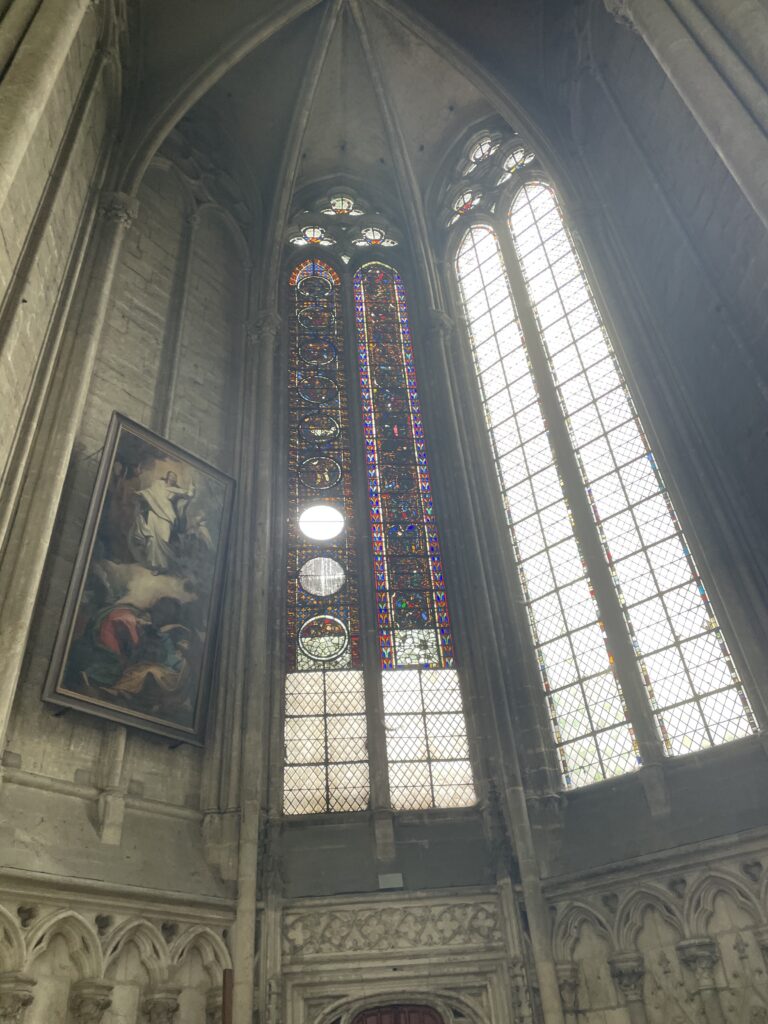
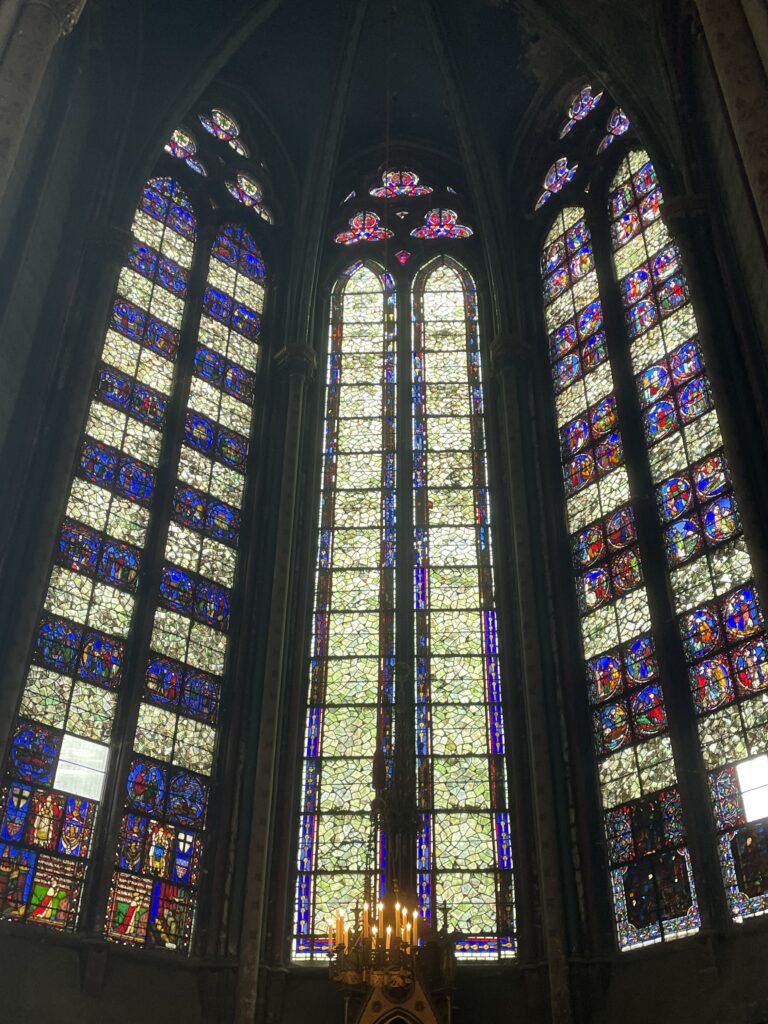
One of my favorite parts of our day trip to Amiens was the cathedral, which pleasantly shocked me with its size and the wealth of historical details and decoration. I was very interested to notice that not only were there an array of different window styles throughout the cathedral, including styles that varied even between panels on the same window and sections that looked to be made up of shattered pieces of other stained glass patterns. I was curious to find out if any windows had ever been destroyed and replaced, perhaps from damage taken during the world wars, which seemed likely considering the location of Amiens.
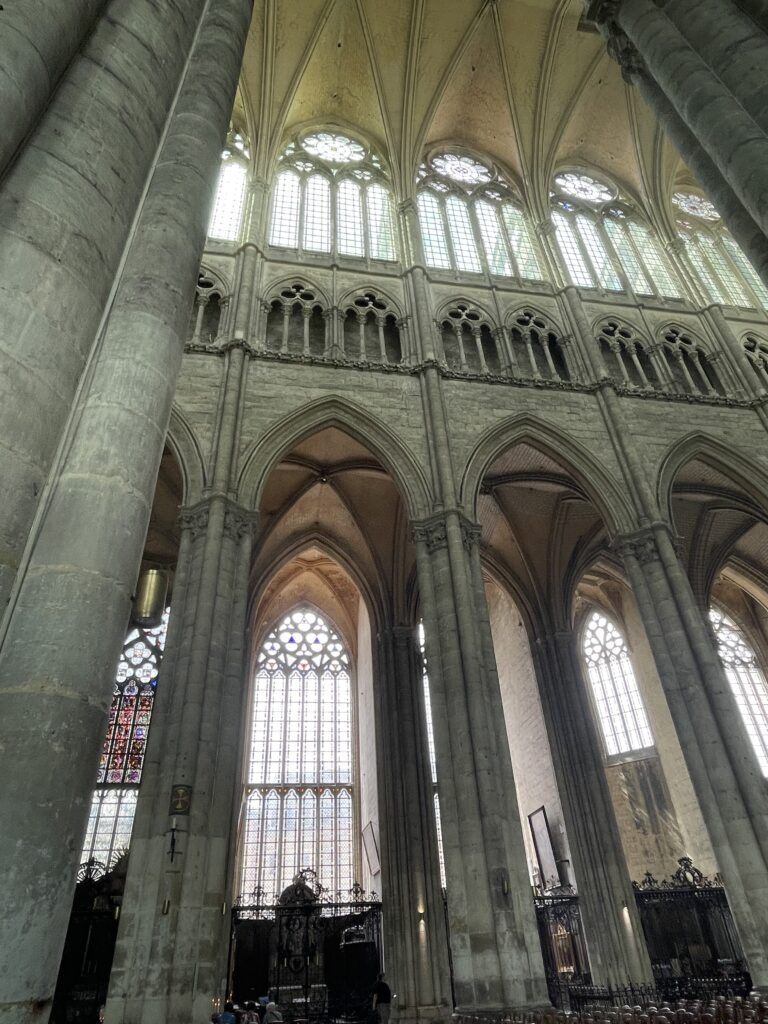
During my research I uncovered a lot more preservation history than I was expecting. The windows survived the world wars remarkably unscathed, even though Amiens found itself on the front lines during the first world war in July of 1918, because measures were taken to protect them before the bombing of the city began.
The Amiens railway station was crucial for the Allied supply line, which made it a prime target for German shelling. The cathedral could have been destroyed in the process, if not for action taken back in 1915.
The windows, as well as the organ, we dismantled and stored for safety and sandbags were stacked ten meters up the columns in the nave and the western exterior wall, along which are the elaborately carved main entrances to the cathedral.
Still, the bombing of the city was intense and the survival of the cathedral can also likely also be attributed to the intercession of the clergy on both sides of the war. The Bishop of Amiens contacted Pope Benedict XV asking for aid in saving the cathedral, and the Pope charged a German clergyman named Eugenio Pacelli to persuade the German forces to make an effort to protect the Cathedral. Pacelli was successful, and would later become Pope Pius XII.
Unfortunately, one of the buildings storing the removed windows did catch fire, causing some of them to be damaged, but the restoration efforts undertaken as the war ended were limited to mild structural support and replacing some window glass. The damage was a lot less severe than other holy sites in France, such as the Reims cathedral which had to be nearly rebuilt.
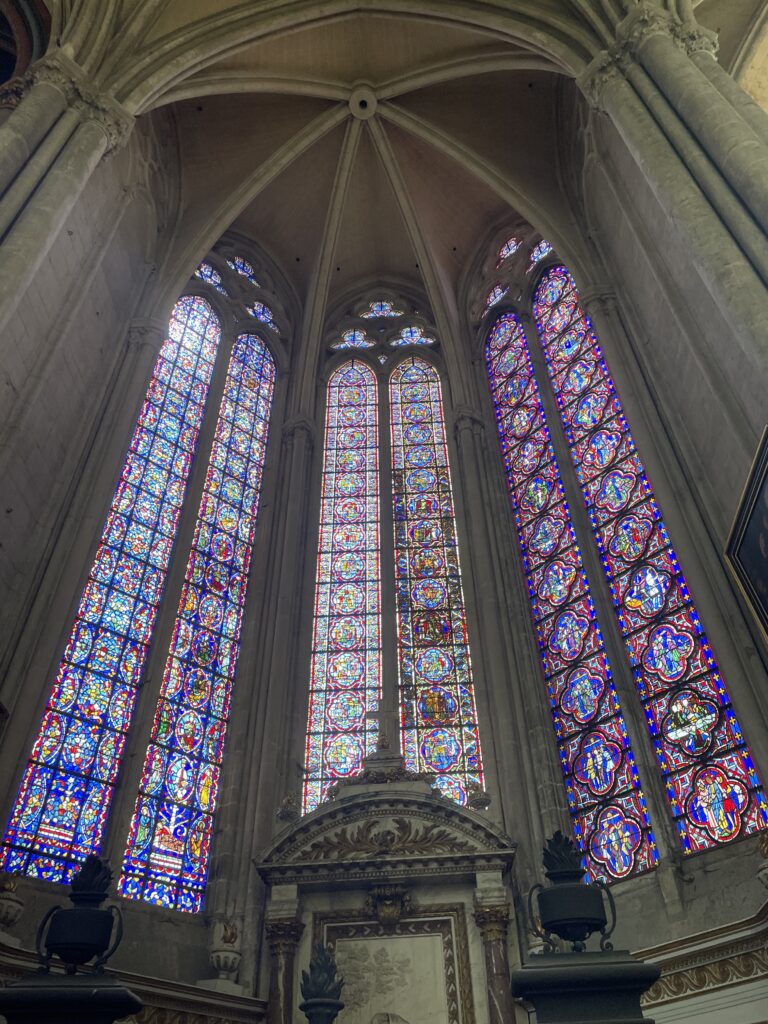
The cathedral survives today because of international cooperation and an interesting instance of proactive preservation. Much more of the cathedral and many more windows could have been damaged or destroyed without the measures taken to protect them. The fact that so much of the original cathedral survives today is a testament to the preservation efforts that were undertaken before the cathedral could be lost.