When visiting churches across Paris and beyond, I really enjoyed looking at the art in the spaces between the depictions of obviously religious events or symbols. There were many patterns used that weren’t explicitly religious but still held some interesting symbolism.
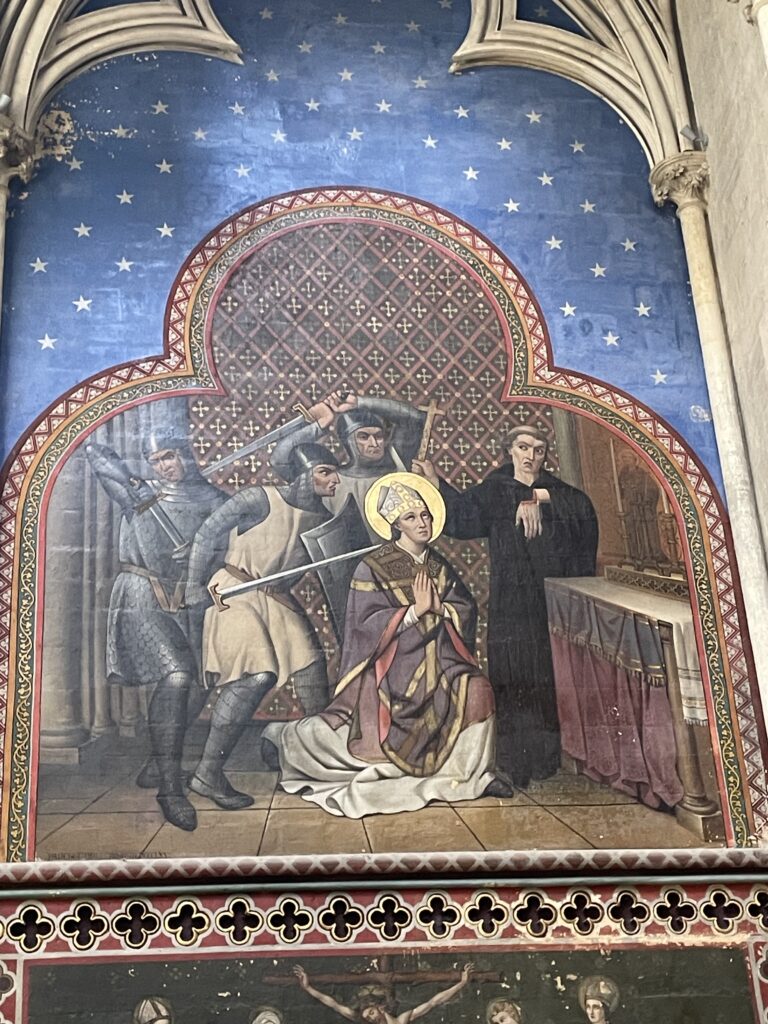
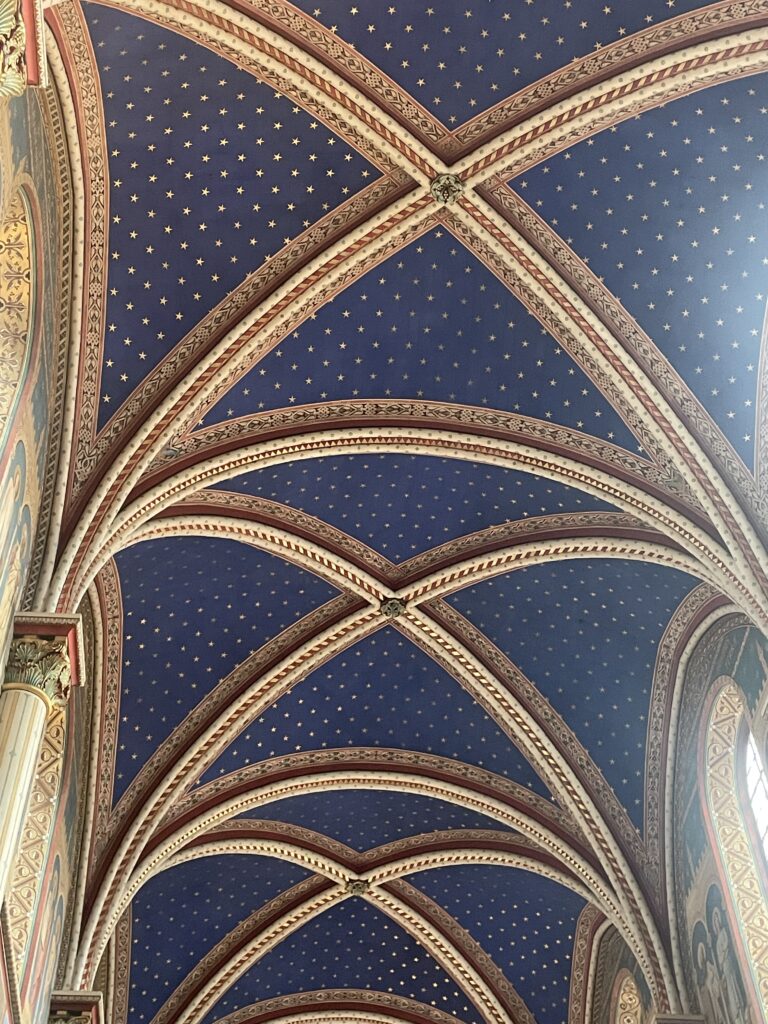
Stars were the most common filler I saw, present in St. Germain des Prés, Sainte Chapelle, and St. Sulpice. They were often painted on the ceiling and sometimes above depictions of scenes of saints or other holy figures to remind congregants of the heavens when they looked up.
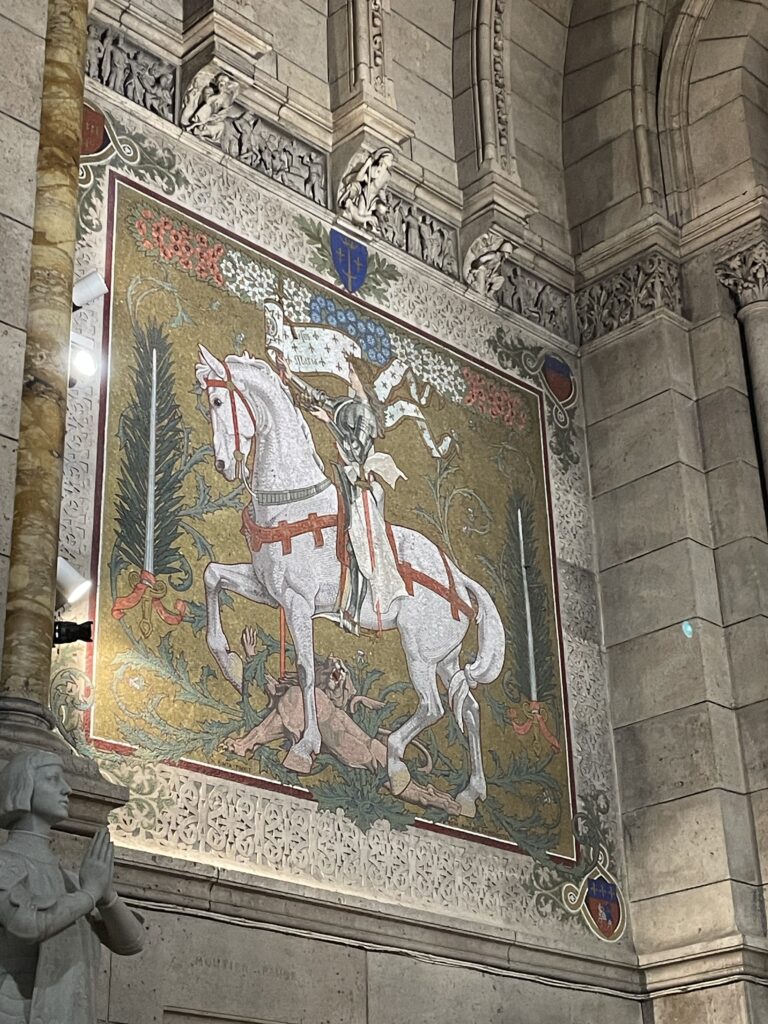
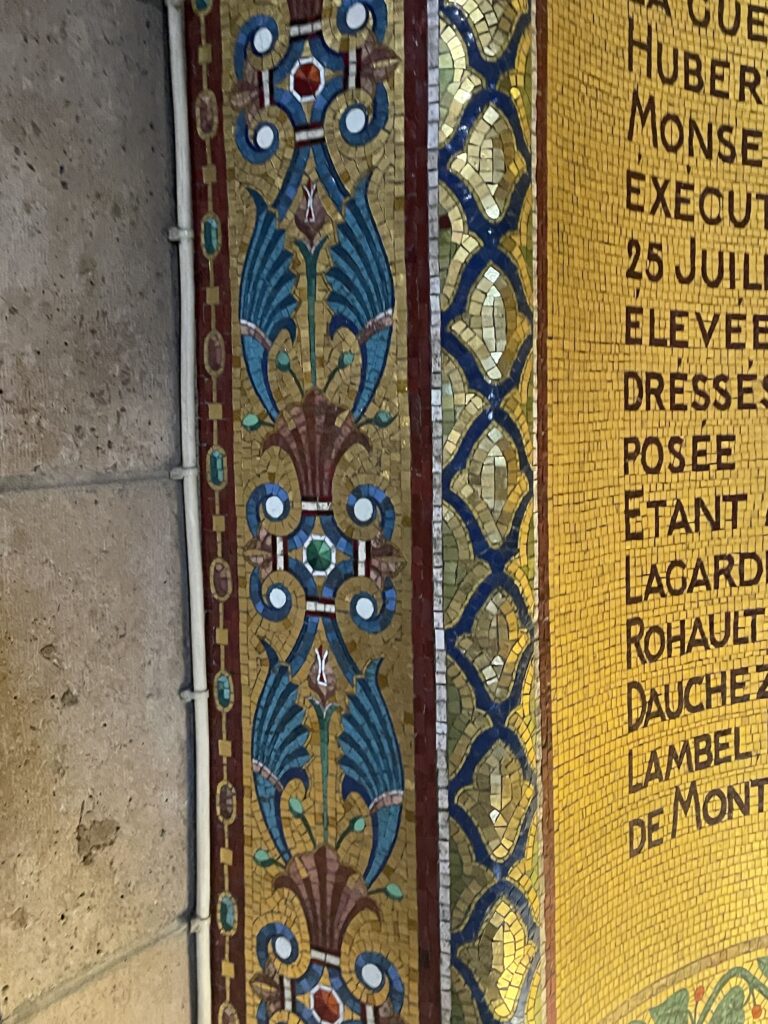
Floral patterns were common. I saw a lot of what I think were lilies, particularly in , likely because they represent purity, resurrection, and Mary the Mother of God. Above the Joan of Arc depiction in Sacre Coeur a french flag was made out of white lillies, poppies, and some sort of blue flower.
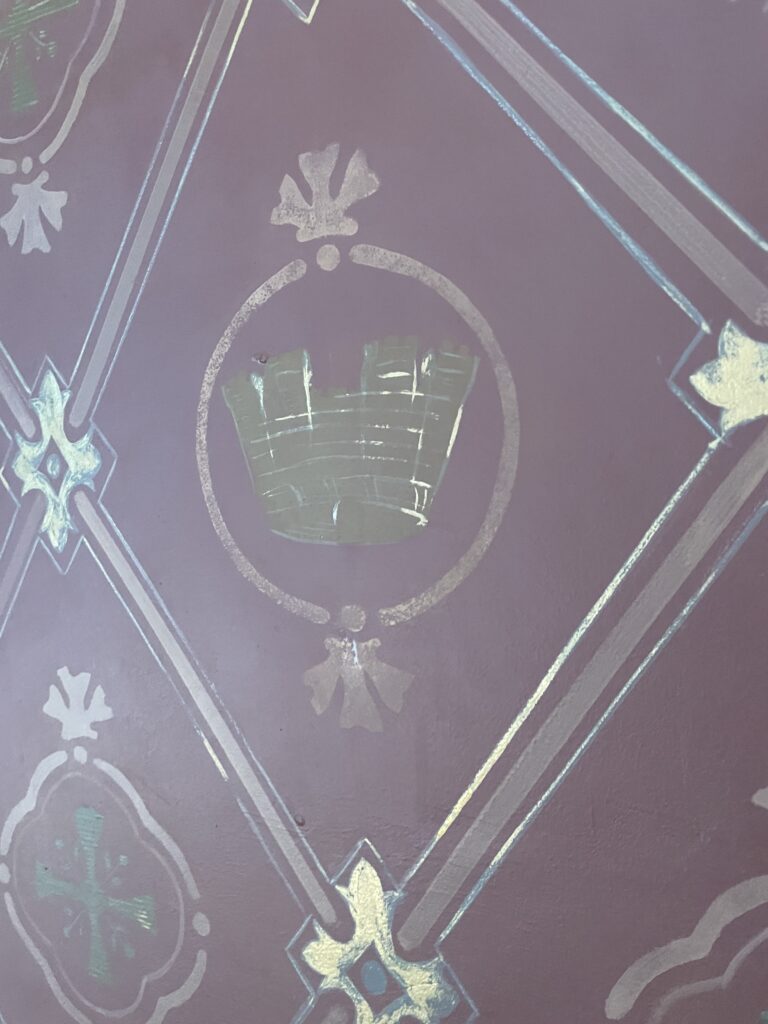
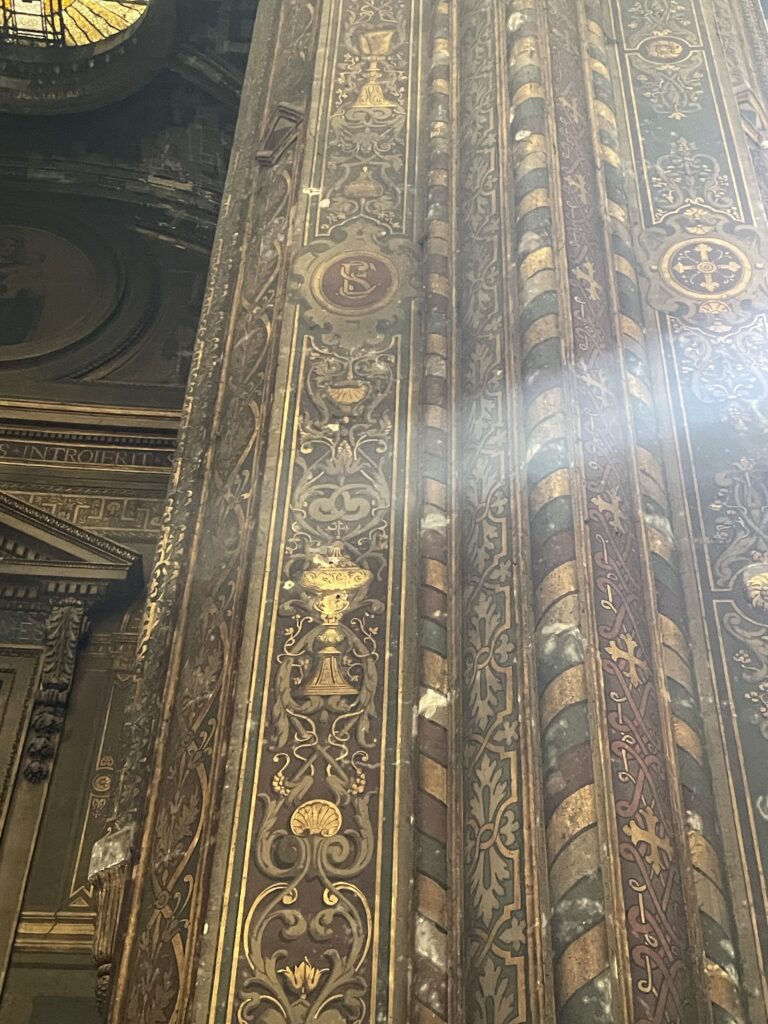
St Eustace had this interesting crown motif done all over multiple walls which could be to remind visitors of God’s rule over the universe but also could be referencing the close connection between that church and the monarchy.
Geometric patterns could be seen painted, like the diagonal stripes in St. Eustache, as well as carved or in mosaics. Sacre Coeur’s mosaics were a good medium for the geometric patterns, as were the stone carvings at Notre Dame de Bayeux, which may date as far back as the Norman period.
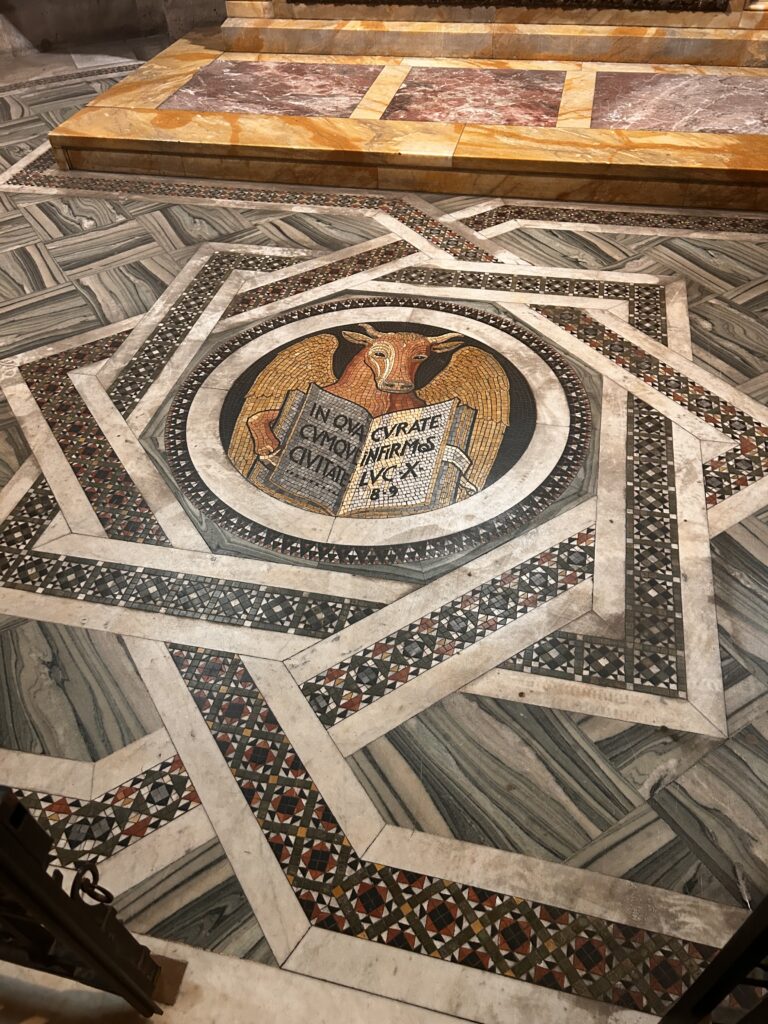
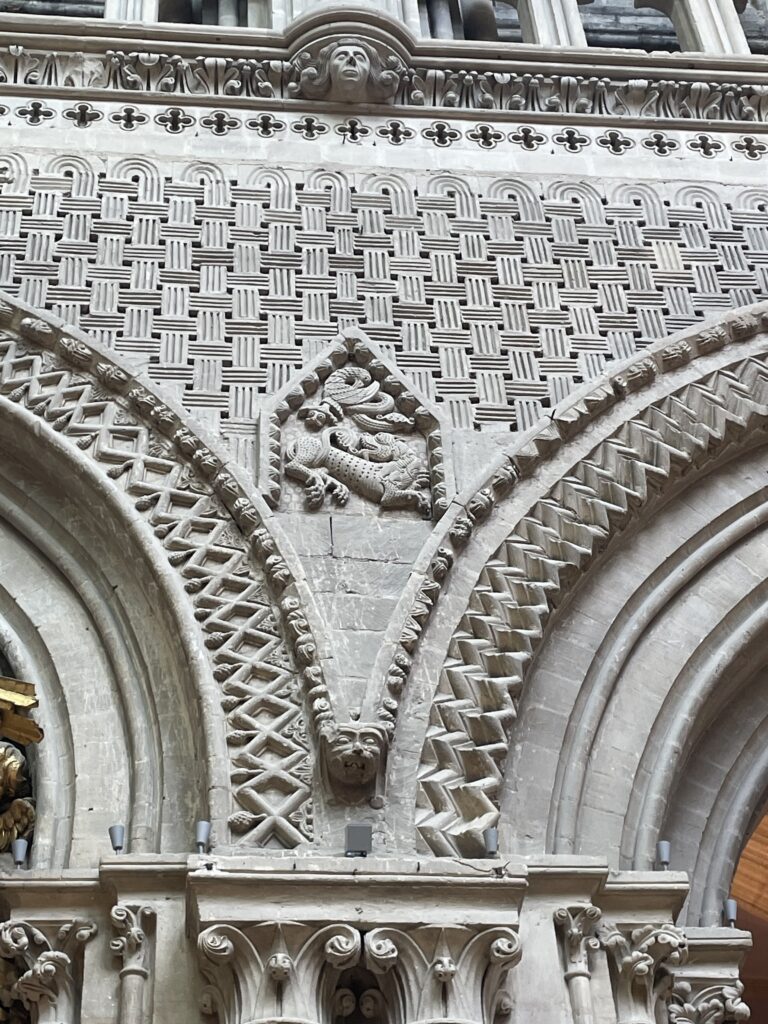
One of the confusing artistic styles used was in Sainte Chapelle, where the walls were done with many of the previously mentioned motifs, but painted to look like they were done in fabric hung on the walls. The use of the fleur de lis symbols done in the French royal chapel make plenty of sense, but I couldn’t identify or puzzle out why the bird motif was used all over the chapel.
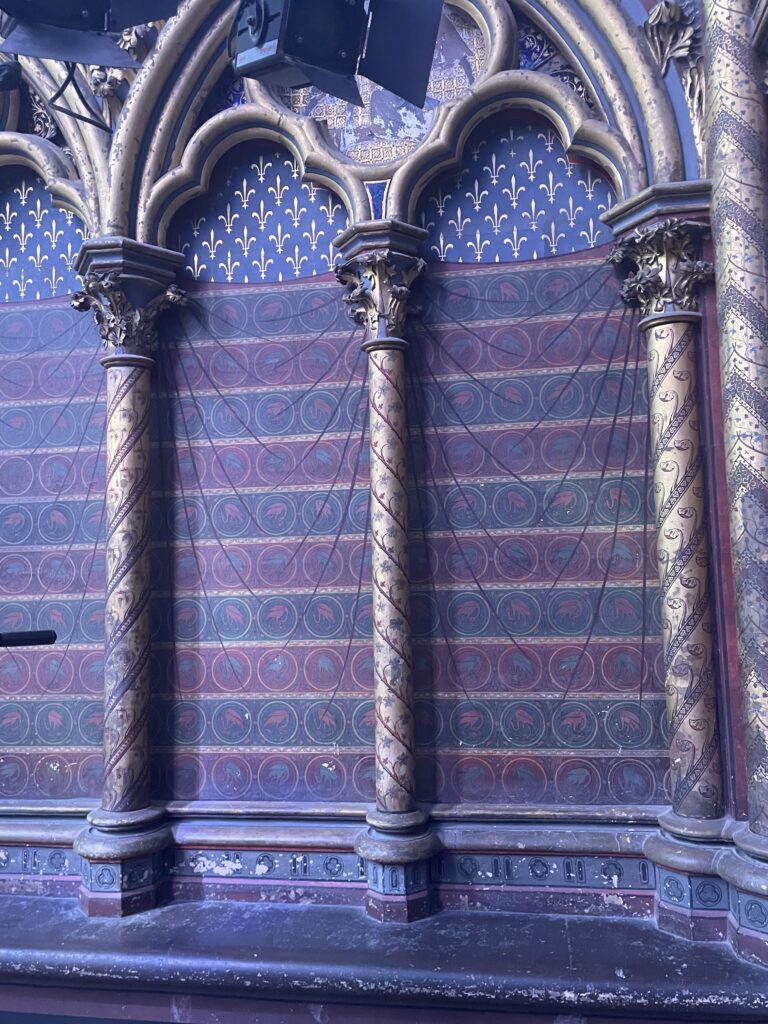
The colors used were fairly standard across the sites I visited, and though there is likely a practical component of what was available at the time, I’ve also learned that there is symbolism connected to the colors used in religious artwork. Red means divinity, sacrifice, or martyrdom. Blue means humanity and truth. Gold represents holiness and light, white represents innocence and renewal, and green means growth and hope.
I love the art style used in all of these churches in all of its 2D symplicity. Its wonderful how when called upon to just fill space between the more impressive and important artworks, beauty and meaning managed to fill the gaps anyway.