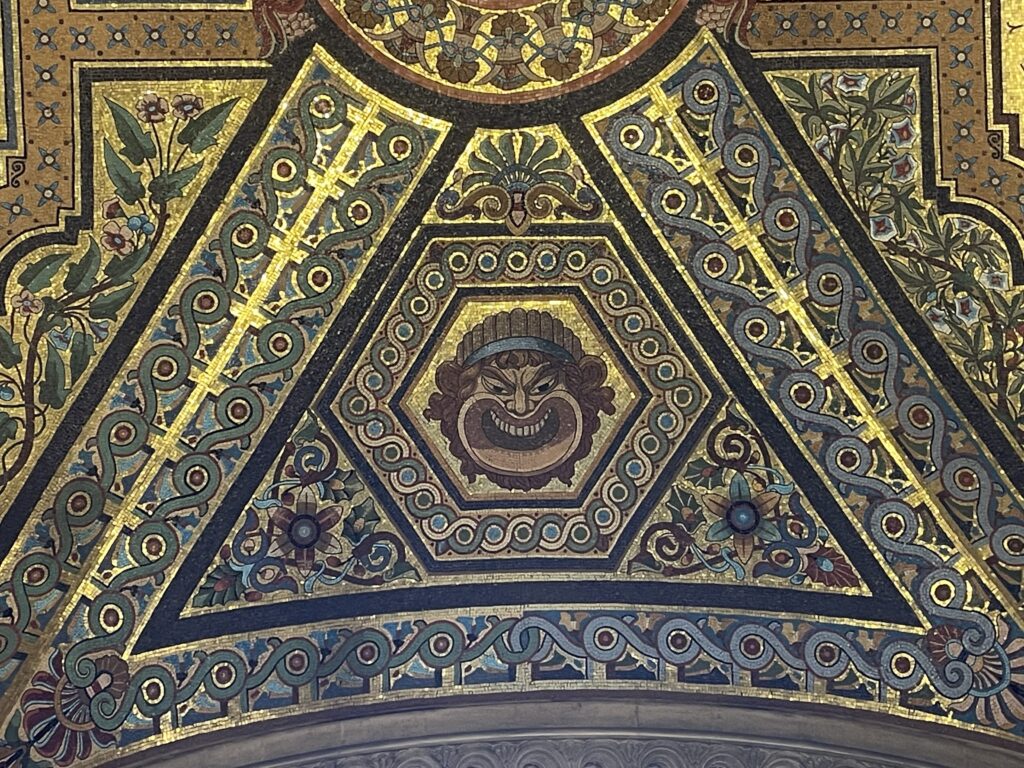
Visitors to the Opera Garnier find breathtaking mosaic art both high above and directly below their feet. It seemed to me as if the entire building was a set built for high society’s social drama with nearly every surface in the building decorated in some extravagant and mind boggling manner.
Nearly everywhere I looked I saw gold leaf and, even more strikingly, complex mosaics of brightly colored lavish material.
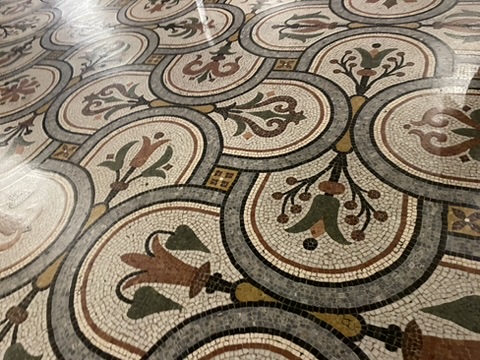
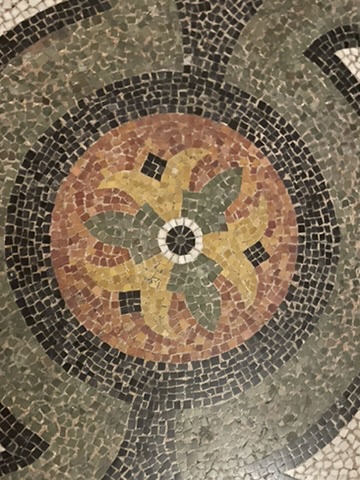
From the receiving rooms to the salons and the grand foyer, there were mosaics of flowers and geometric patterns covering the floors. However, it was the roof of the grand foyer that really stole the show, with its depiction of numerous figures from mythology and designs such as zodiac symbols and sections made to look like giant gemstones embedded in the ceiling.
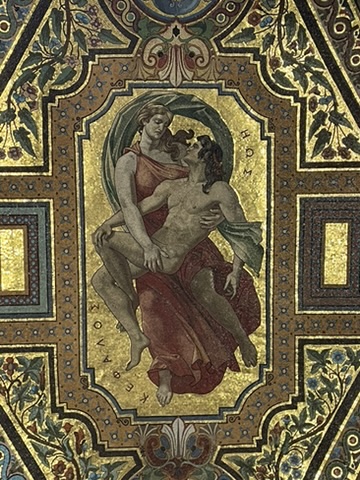
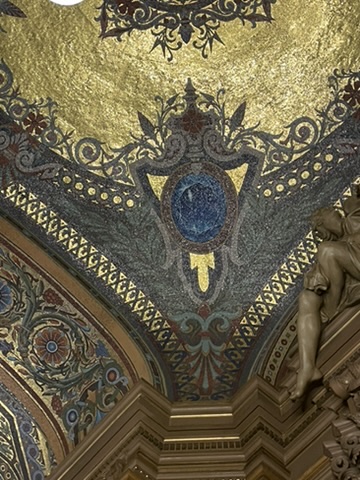
All in all, 24 different varieties of marble were used in the design and decor of the opera, all of which had to be imported for their use. The mosaics were first designed by Paul-Alfred de Curzon and then the technical part of the process of creating the painstakingly detailed mosaic was undertaken by the Venetian Salviati family.
When designing the mosaic ceiling, Garnier had this process immortalized with an inscription added in 8th century Byzantine Greek that reads “Decorative mosaic was introduced into France for the first time in order to ornament this vault and popularise this art form. The figures painted by Curzon were executed by Salviati, the ornaments by Faccine. The architecture is by Charles Garnier.”
While the lofty claim that the Opera Garnier introduced mosaic art to Paris hardly holds water, some of the credit for the prevalence of mosaic art in Parisian architecture since that time could reasonably be ascribed to the building.
I’ve seen tile art on the side of buildings, on floors, and spelling out businesses’ names above storefronts across the city.
In particular, Printemps had a beautiful tile floor in the entryway spelling out the name of the department store and the florals and bright designs appropriate for the name of the establishment.
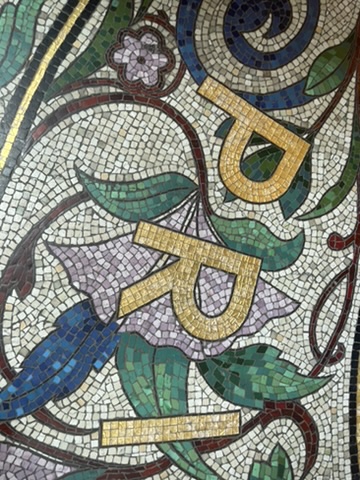
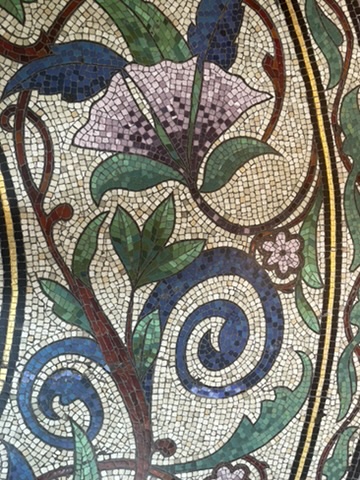
In the Galeries Lafayette, I saw mosaic art used to spell out a brand name and a design that was more abstracted but still unmistakably inspired by mosaics used as a background for the more modern lit up neon signs.
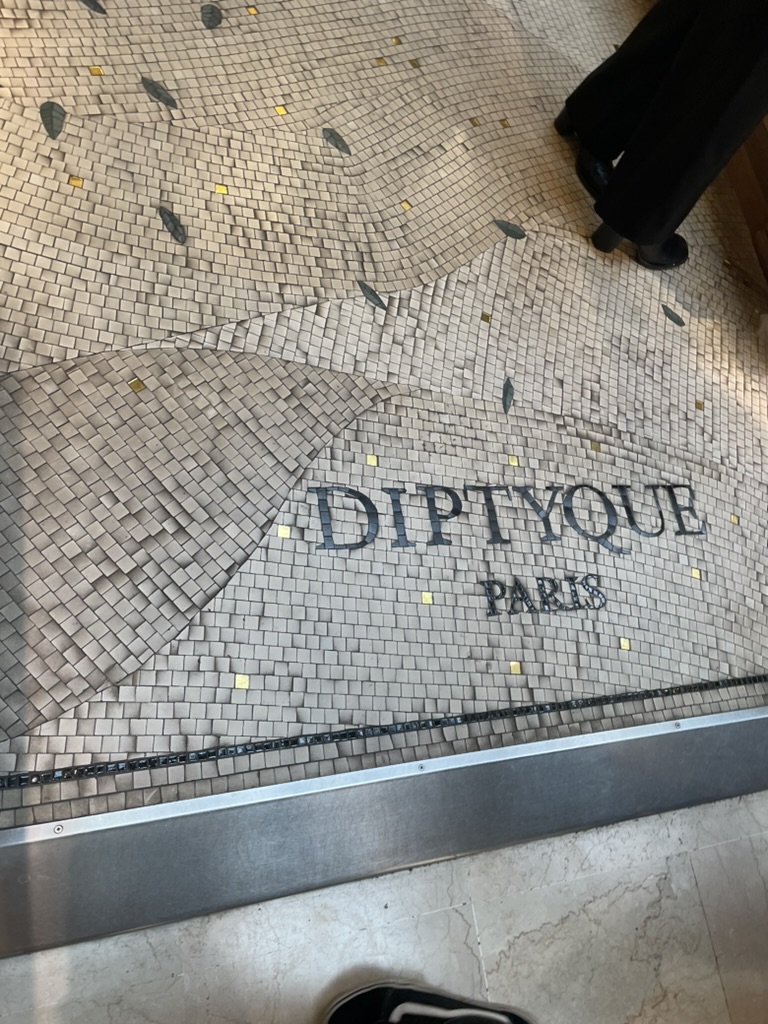
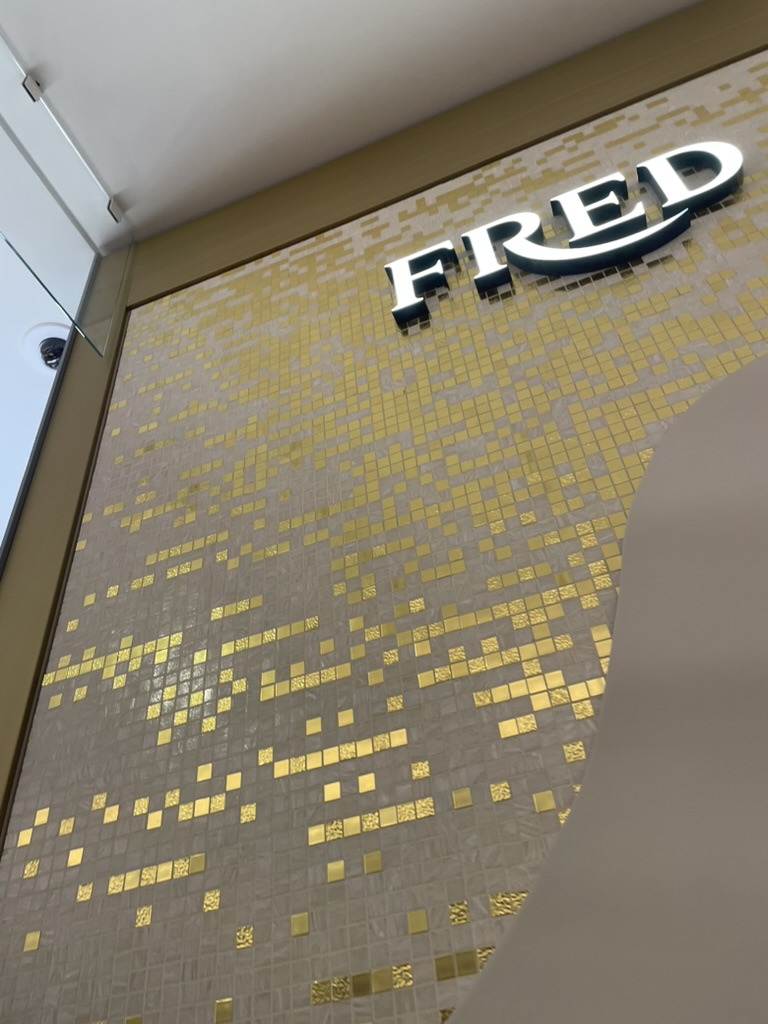
The Opera Garnier may not have originated mosaic art in France but it must be given its due as an architectural icon that certainly popularized it and helped make it a mainstay in traditional Parisian architecture and ornamentation that can be seen on some of the most famous buildings in the city.
I found the read-up on mosaic tiles fascinating. The pictures and historical context shed light on what we saw during our visit on Monday. I did not know about that text inscribed in the building, very fitting of the artists who created the building.