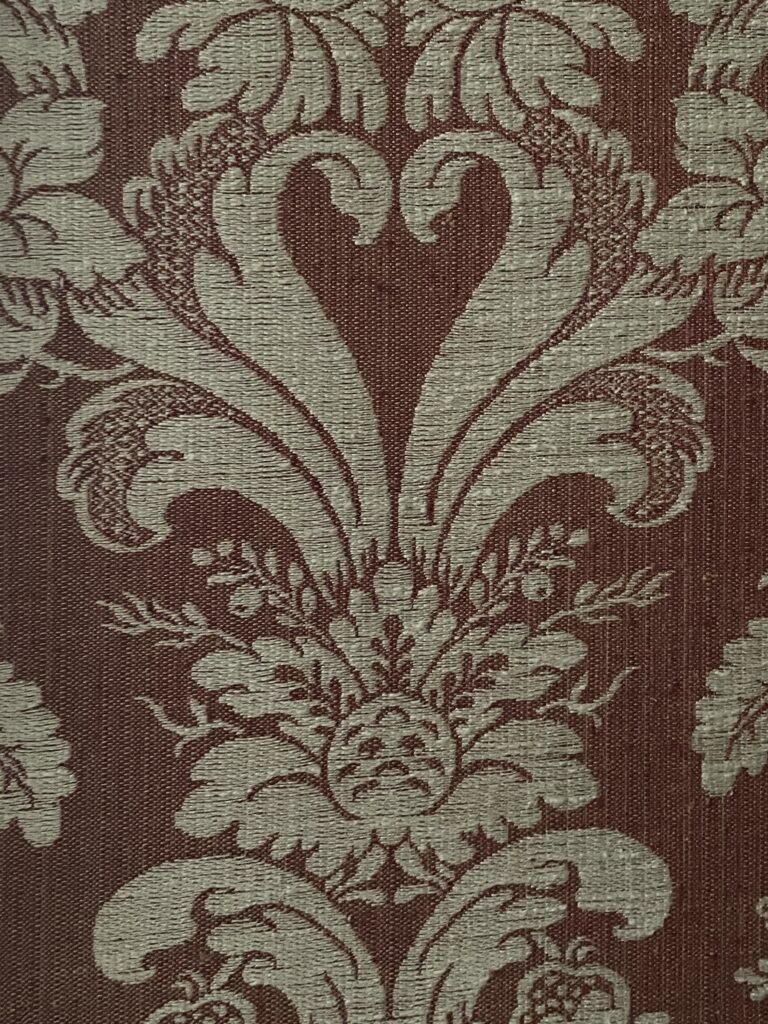
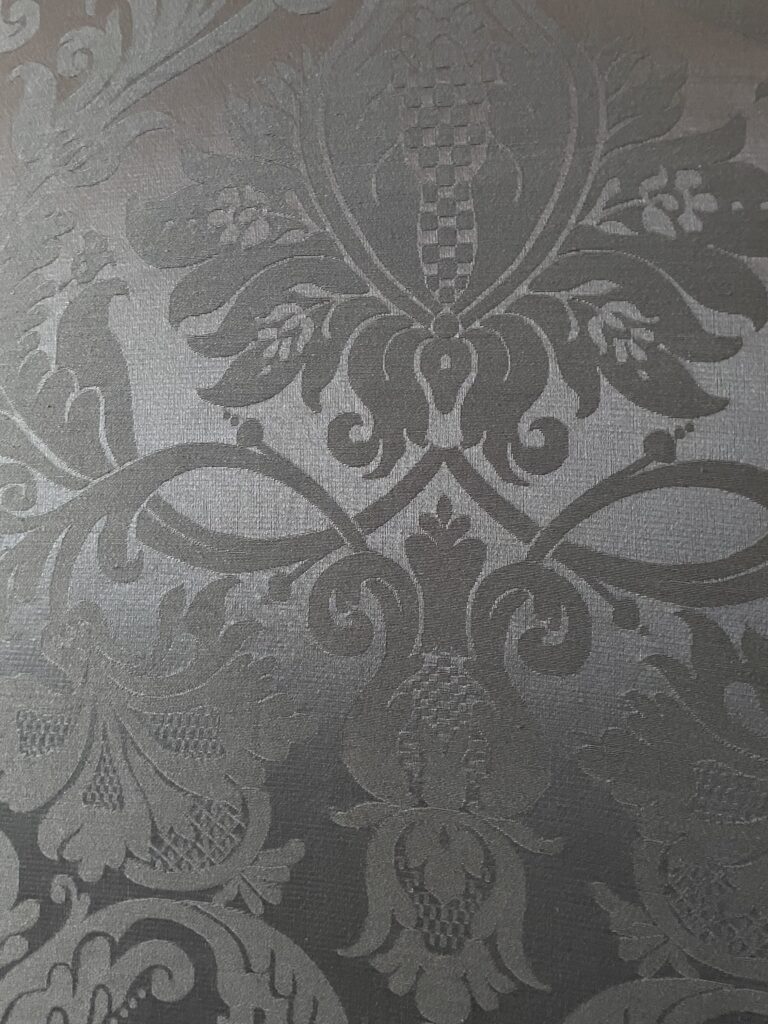
In such spaces as the Palace of Versaille, the Nation Archives (formerly the home of the wealthy Soubise family), and the Carnavalet Museum (which also is a converted residence) I was interested to note that there was a type of material on the walls which appeared to be some sort of woven textile. One location was a fluke but it was everywhere, which made me curious as to what exactly the material it was and why it was popping up all over town.
I wondered if this was some mindpoint between woven tapestries and printed wallpaper. It was definitely not printed paper but not quite a tapestry. It also seemed to me like the time periods the spaces sought to represent were too early for printed wallpaper. Is this material actually what would have been on the walls? If it wasn’t, what would have been and why was this material being used?
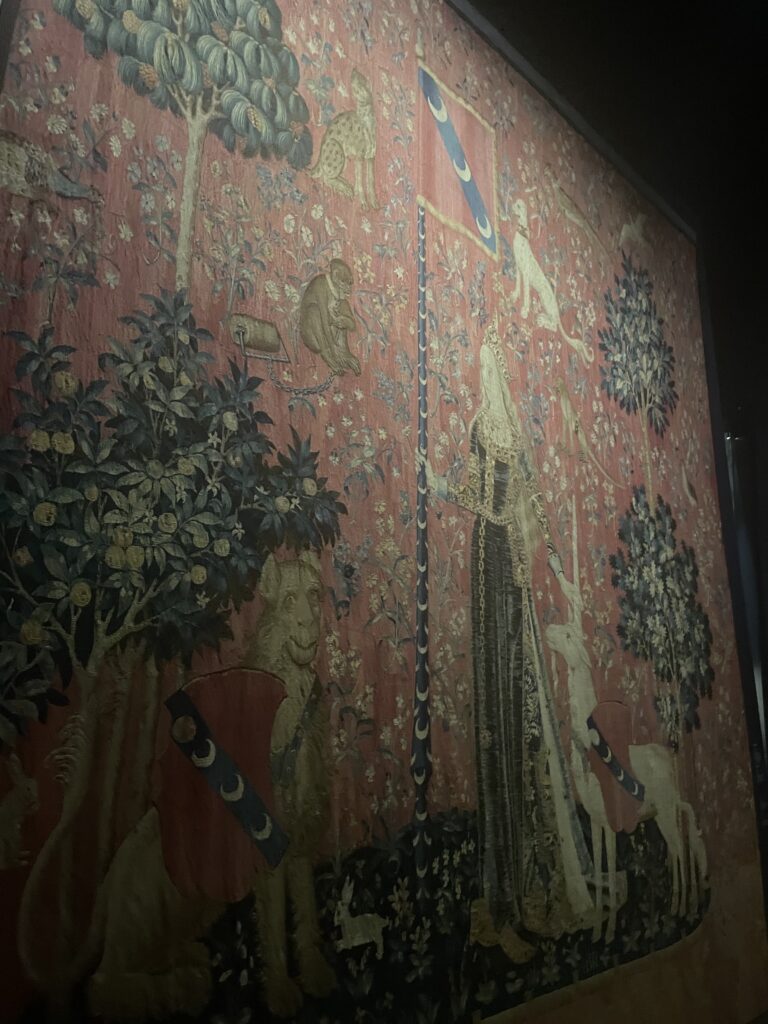
Tapestries were the first wall hangings to become popular in Europe, and were inspired by Arabian wall hangings. As examples such as the Maiden and the Unicorn, which we saw at the Cluny, will demonstrate, they were emblematic of wealth and privilege thanks to the skill and time required to make them. The wall hangings I saw were obviously not to right style or displayed the way a medieval tapestry would have been.
However, after a bit of research I found that as tapestries declined in prevalence a style of wall covering called “flock textile” came into fashion, flock being a powdery byproduct of wool processing in the day, and it was applied with adhesive to cloth in order to mimic velvet of damask fabric. Flock wallpaper began appearing at the end of the 17th century and was used through until the late 18th century, which is the era many of the spaces where I observed this wall covering seek to emulate.
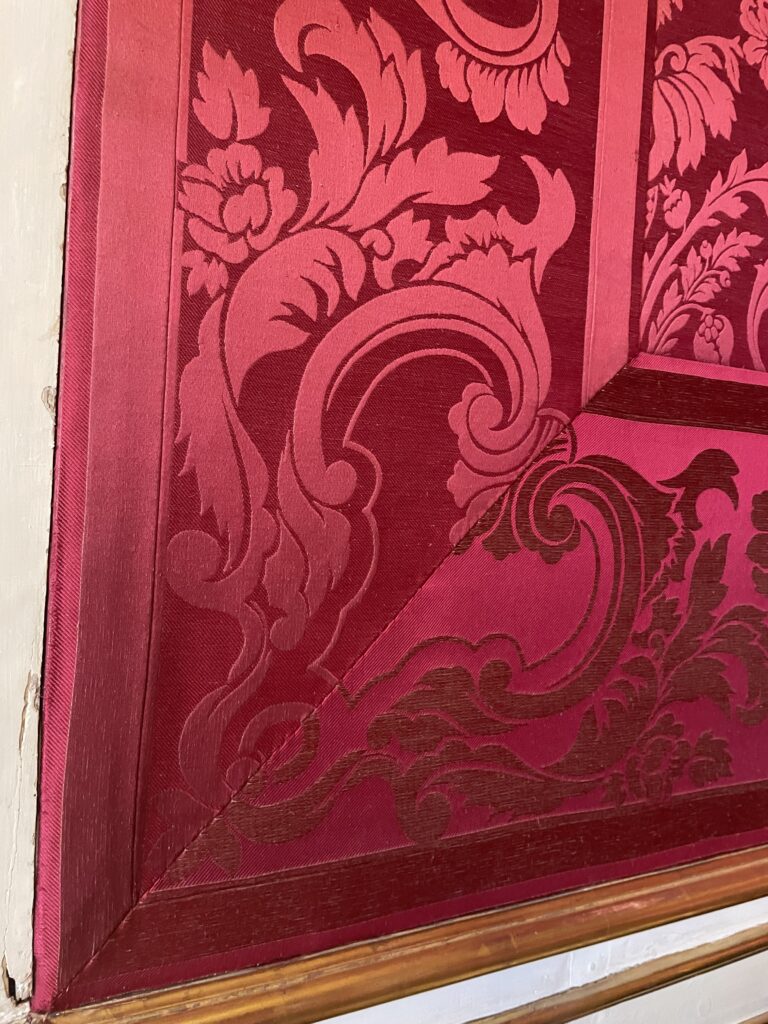
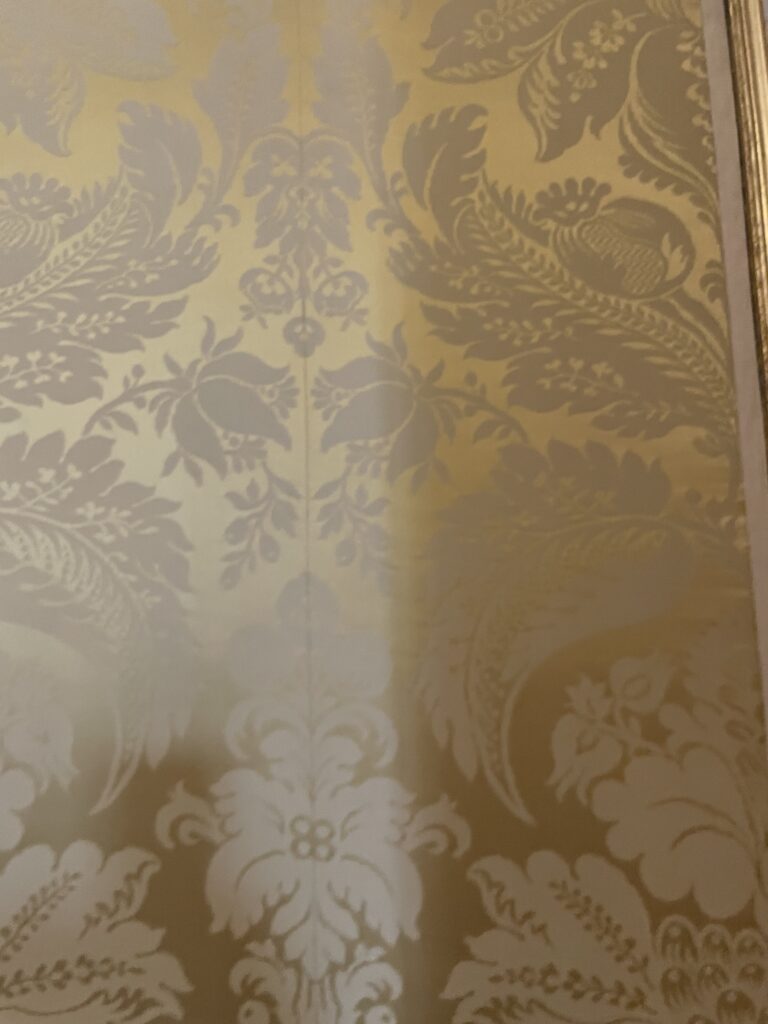
None of the wall coverings I’ve been observing look exactly like velvet or damask fabrics I’ve seen, but they seem simular to damask. Flock is also known to have repeating patterns like what I observed, so I think it’s possible that these wall coverings are either real flock textile or reproductions intended to mimic flock textile.
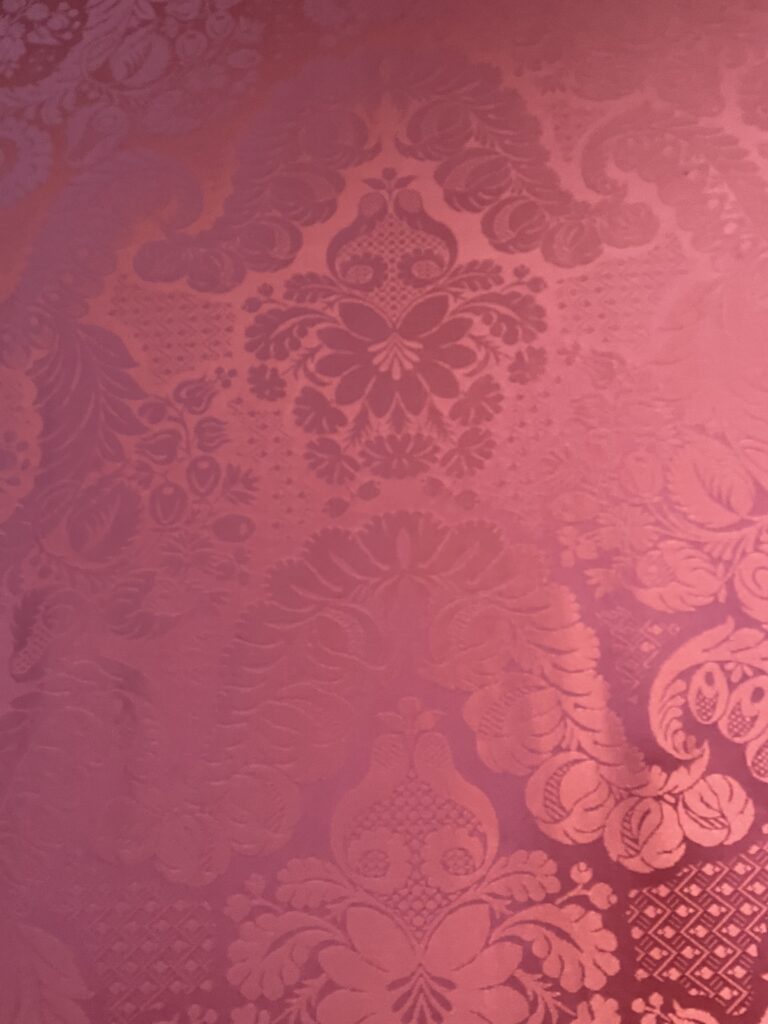
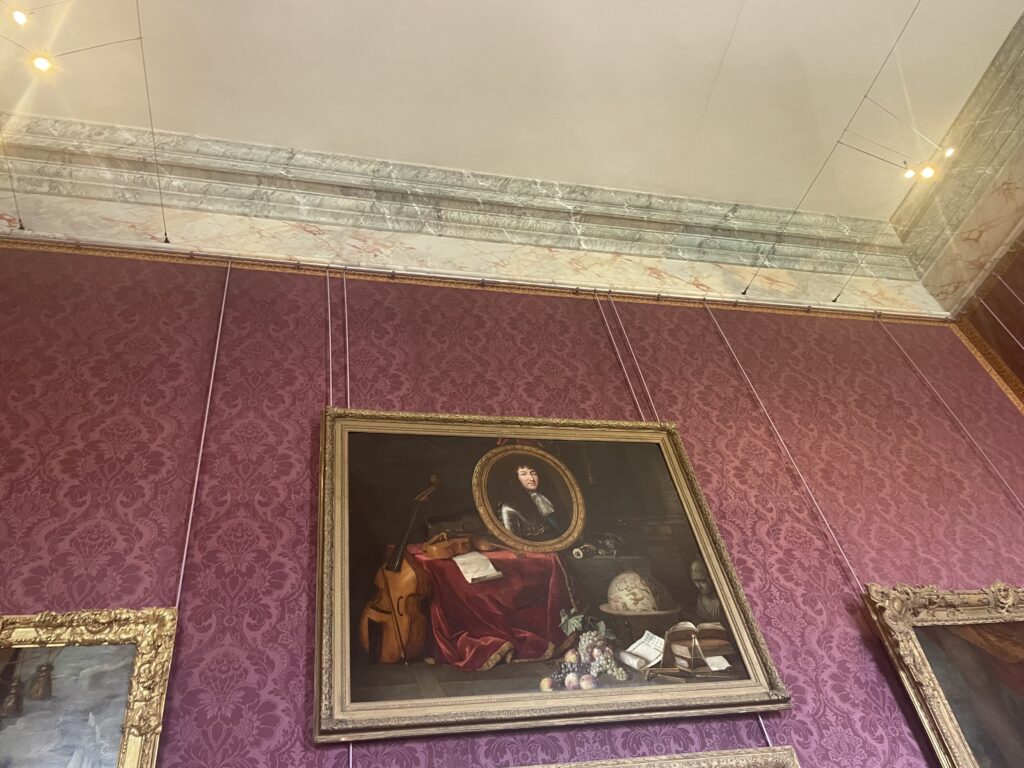
As for the specific spaces I saw what I believe to be flock wallpaper, I also found claims that Madame de Pompadour hung flock wall paper in her rooms in Versaille itself, making it very reasonable that those in charge of the building’s preservation and display would choose flock textile for many of the rooms. It’s also noted to be more durable than both the fabric wall hangings it mimicked and wallpaper, making it a good long-term and lasting choice for a room that needs to look appropriate for a time period.
I can’t say for sure whether or not this style of wall hanging is actually meant to emulate flock textile, but I’ve had fun on my deep dive into the history of Parisian interior design to try and find out!